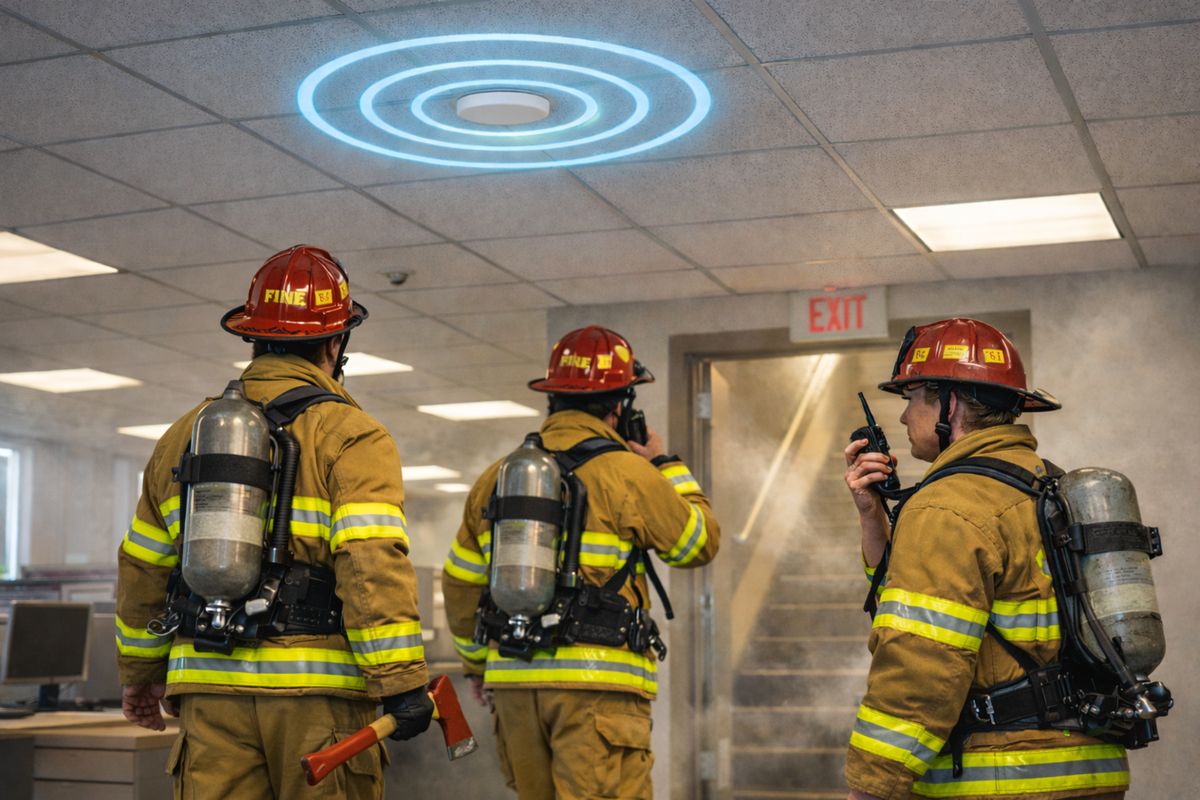
When emergencies strike, reliable in-building radio communication can mean the difference between life and death. Firefighters, police officers, and emergency medical teams depend on clear, uninterrupted communications to coordinate rescue operations, navigate complex structures, and keep both occupants and responders safe. This is where ERCES—Emergency Responder Communication Enhancement Systems—play a critical role.
In this article, we’ll explain what ERCES systems are, how ERCES systems function, why they are required, who installs them, and who ultimately benefits from the investment. We’ll also explore how modern public safety DAS solutions—such as Nextivity SHIELD EXTEND and SHIELD SOLO ERCES systems—represent a major leap forward from legacy, fixed-gain BDAs through advanced system design and proprietary IntelliBoost® technology.
What Are ERCES?
ERCES (Emergency Responder Communication Enhancement Systems) are in-building wireless infrastructure designed to improve public safety radio coverage for first responders. These systems ensure that emergency personnel can communicate reliably inside buildings where radio signals are often weakened or completely blocked by construction materials such as concrete, steel, low-E glass, and underground structures.
ERCES systems are typically mandated by fire and building codes, including NFPA 1221, IFC 510, and related local ordinances, whenever in-building radio coverage fails to meet minimum performance thresholds during testing.
At its core, ERCES deployments are not about convenience—it is about mission-critical, code-required communications for emergency response.
How Do ERCES Systems Work?
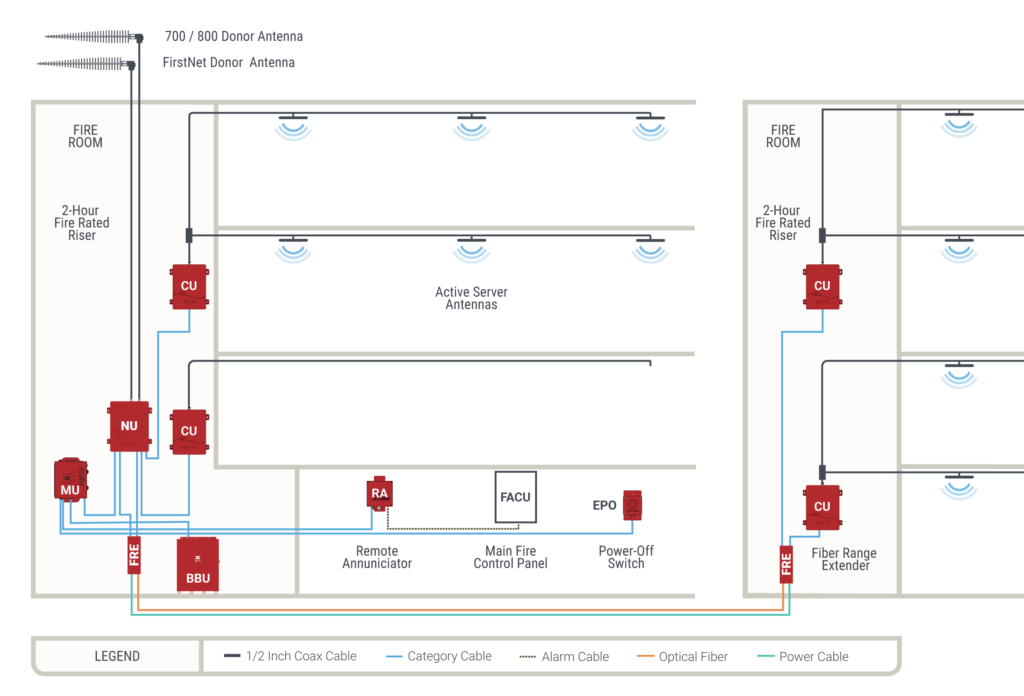
ERCES captures radio signals from outside a building and redistributes them throughout the interior in a controlled, code-compliant manner.
A typical ERCES system includes:
- Donor antennas mounted on the roof to capture public safety radio signals
- Amplification and conditioning equipment to boost and manage signal levels
- Distribution infrastructure, such as coax, fiber, or Ethernet
- In-building antennas that rebroadcast the signal across stairwells, hallways, basements, and critical areas
- Monitoring and alarming components to ensure continuous compliance
Traditional ERCES systems rely heavily on fixed gain settings, manual tuning, and static assumptions about RF environments. While functional, these legacy approaches are often complex to deploy, difficult to maintain, and vulnerable to noise, interference, and environmental changes.
Why ERCES Systems Are Required
Modern buildings are increasingly hostile to radio frequency (RF) propagation. As a result, public safety agencies frequently experience dead zones inside structures—especially in:
- High-rise buildings
- Hospitals and medical campuses
- Airports and transit facilities
- Convention centers and arenas
- Parking garages and basements
- Data centers and critical infrastructure sites
Fire marshals and Authorities Having Jurisdiction (AHJs) require ERCES installations to ensure that:
- First responders maintain two-way radio communications at all times
- Emergency calls can be transmitted and received clearly
- Incident commanders have situational awareness throughout a structure
- Communications systems remain operational during power outages
ERCES systems are therefore not optional enhancements—they are life-safety systems.
How Long Have ERCES Systems Been Around?
ERCES systems began appearing in the late 1990s and early 2000s as building materials evolved and radio systems transitioned from analog to digital. Early solutions were largely legacy bi-directional amplifiers (BDAs) paired with passive antenna systems.
While these early systems helped address coverage gaps, they were designed for a much simpler RF landscape—one without today’s dense urban environments, multi-band public safety networks, or stringent noise and interference requirements.
As codes evolved, ERCES requirements became stricter, placing greater emphasis on:
- Uplink noise control
- System isolation
- Reliability and redundancy
- Continuous monitoring and alarming
- Verified talk-in and talk-out performance
This evolution exposed the limitations of traditional ERCES architectures and created demand for more intelligent, adaptive solutions.
Who Installs ERCES Systems?
ERCES systems are typically designed and installed by certified public safety communication integrators with expertise in RF engineering, fire code compliance, and life-safety infrastructure.
Stakeholders involved in ERCES projects often include:
- RF and DAS integrators
- Electrical contractors
- Fire protection engineers
- Building owners and developers
- Fire marshals and AHJs
Because ERCES systems are inspected and approved by local authorities, installation accuracy, documentation, and performance validation are critical.
Who Benefits from an ERCES Investment?
While ERCES systems are often funded by building owners or developers, the benefits extend far beyond compliance.
Primary beneficiaries include:
- First responders, who gain reliable communications in emergencies
- Building occupants, who benefit from faster, safer emergency response
- Property owners, who reduce liability and improve building safety credentials
- Municipalities, which gain more resilient public safety infrastructure
In short, ERCES systems protect lives, property, and public trust.
The Limitations of Traditional ERCES Systems
- Manual gain calculations and tuning
- Static power settings that cannot adapt to RF changes
- Excess uplink noise that degrades public safety networks
- Complex commissioning processes
- Limited or no remote monitoring
- Difficult AHJ testing and re-certification
These challenges increase installation time, risk compliance failures, and create long-term operational burdens.
Next-Generation Systems: Smarter by Design
Nextivity SHIELD EXTEND
SHIELD EXTEND is a scalable, modular public safety DAS designed to support 700/800 MHz LMR and FirstNet within a single, unified ERCES platform. Built on a Power-over-Ethernet (PoE) architecture, SHIELD EXTEND scales from small buildings to large, complex facilities while maintaining precise control over uplink and downlink performance.
- Real-time, slot-to-slot automatic gain control
- Centralized PoE architecture for simplified installation
- Integrated remote monitoring and alarming
- Built-in talk-out and grid testing tools
- Concurrent LMR and FirstNet support
Nextivity SHIELD SOLO
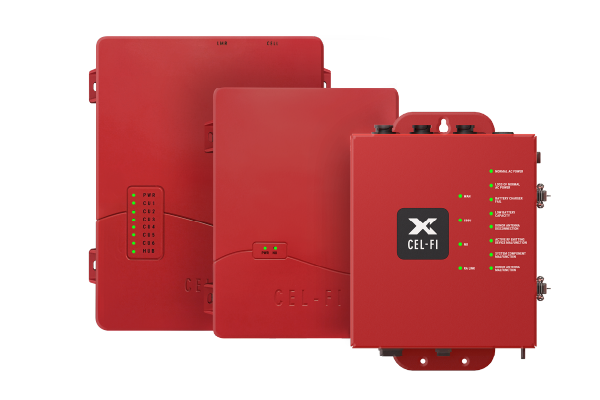
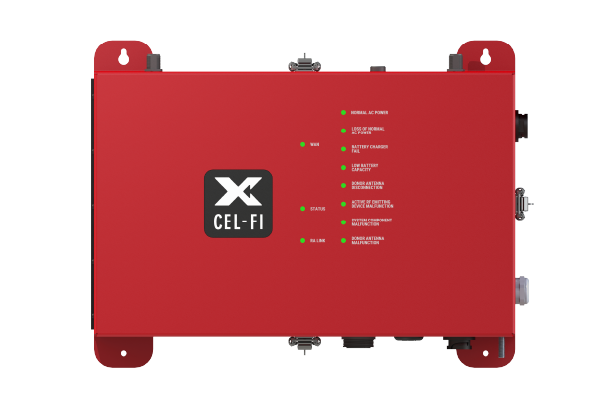
For smaller buildings or localized coverage needs, SHIELD SOLO delivers enterprise-grade ERCES performance in a compact, integrated form factor. As a half-watt public safety BDA, SHIELD SOLO supports 700/800 MHz LMR and can be configured in the field for Class A or Class B operation.
- Automatic uplink and downlink gain setting
- Built-in noise mitigation and isolation control
- Remote monitoring via the Nextivity WAVE Portal
- Industry-leading talk-in and talk-out performance
Why IntelliBoost® Changes Everything
At the heart of Nextivity public safety solutions is IntelliBoost® technology. Unlike traditional legacy BDAs that rely on static RF assumptions, IntelliBoost dynamically adapts to real-world conditions in real time.
- Cleaner uplink signals
- Superior talk-in and talk-out clarity
- Faster commissioning
- Easier AHJ approval
- Long-term system stability
The Future of ERCES
As public safety communications continue to evolve—incorporating broadband services like FirstNet alongside traditional LMR—ERCES systems must become smarter, more adaptive, and easier to manage.
Nextivity SHIELD ERCES solutions represent this future: intelligent, code-compliant public safety DAS systems built for real-world emergency response.
Final Thoughts
ERCES systems are no longer just a regulatory checkbox—they are a foundational element of modern building safety. Understanding how ERCES works, why it matters, and how next-generation solutions outperform legacy systems is essential for building owners, integrators, and public safety stakeholders alike.
With SHIELD EXTEND and SHIELD SOLO, Nextivity is redefining what ERCES systems can be—delivering smarter architecture, cleaner signals, and uncompromising performance when it matters most.