What is an In-Building DAS System?
An in-building DAS system (Distributed Antenna System) is designed to deliver strong, reliable cellular coverage inside buildings where outdoor signals cannot effectively penetrate. From offices and hospitals to warehouses and retail spaces, an in-building DAS system ensures consistent connectivity for voice, data, and mission-critical applications.
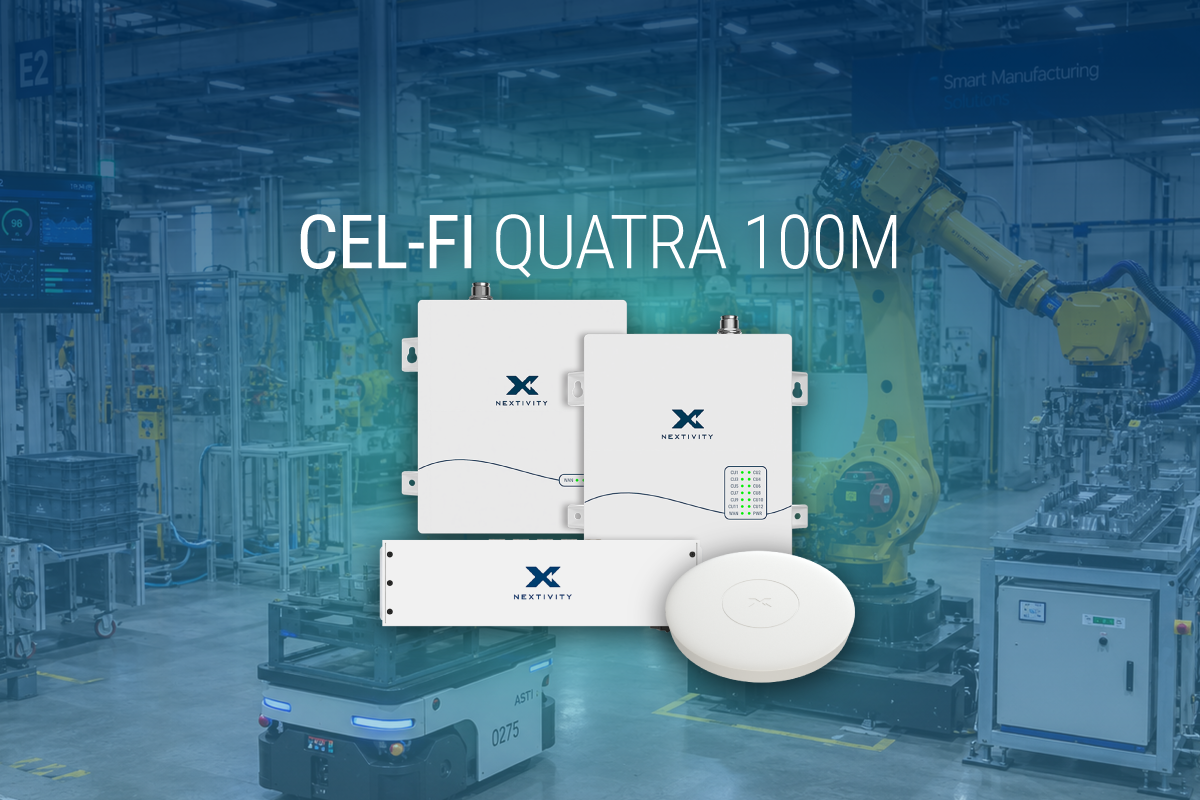
Modern in-building DAS systems—like those developed by Nextivity—use intelligent signal processing and active components to provide high-performance coverage at a significantly lower cost than traditional DAS solutions. By leveraging a combination of category cabling and fiber, these systems efficiently distribute cellular signal without the complexity and expense of legacy DAS deployments.
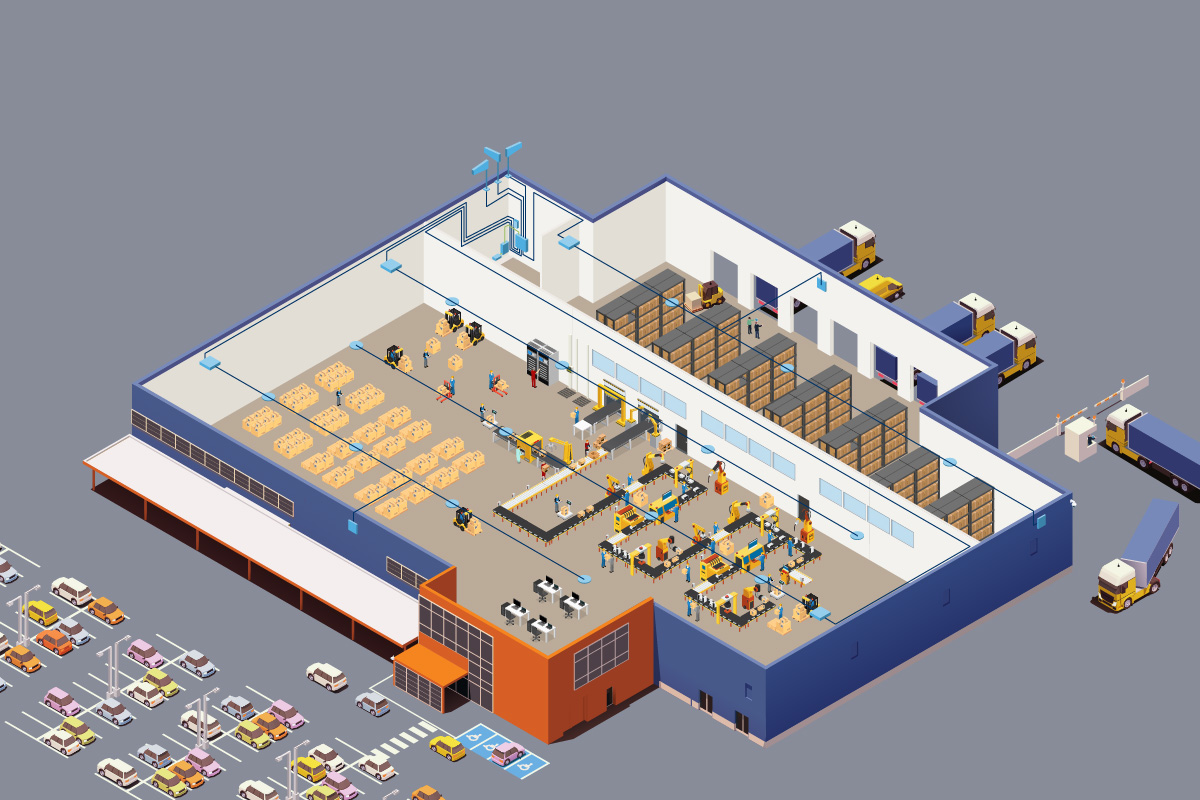
In many cases, an in-building DAS system can be installed using Power over Ethernet (PoE), simplifying infrastructure and reducing installation time. Network units capture off-air signal, clean and digitize it, and transmit it to coverage units, which convert the signal back to RF and distribute it throughout the building. The result is strong, noise-free, and reliable indoor cellular coverage.
Nextivity’s in-building DAS systems are approved by more than 200 operators across 100+ countries and are unconditionally network safe—making them one of the most effective ways to extend macro network performance indoors.
In-Building DAS vs. Legacy DAS
A traditional or legacy DAS is often complex, expensive, and time-consuming to deploy. Installation can take months—or even more than a year—due to extensive RF engineering, carrier coordination, and infrastructure requirements.
While legacy DAS systems are essential for high-capacity venues like stadiums, airports, and large public spaces, most indoor connectivity challenges are not about capacity—they’re about coverage. In many buildings, the cellular signal simply doesn’t reach users.
A modern in-building DAS system solves this problem quickly and cost-effectively by capturing off-air signal and intelligently distributing it throughout the building. This approach reduces deployment time, lowers costs, and simplifies implementation—while still delivering enterprise-grade performance.
Active vs. Passive DAS Systems Explained
Active DAS (Legacy DAS)
An active DAS system distributes cellular signal using powered components connected via fiber infrastructure. These systems are typically used in environments where both coverage and capacity are critical.
Key characteristics:
- Maximum coverage and capacity
- Requires RF engineering expertise to design and deploy
- Dependent on carrier agreements (can be time-consuming)
- Requires fiber backhaul and often a base station
- Higher cost and ongoing maintenance
Passive DAS
Passive DAS systems use Bi-Directional Amplifiers (BDAs) and passive components to rebroadcast cellular signals. While more affordable, they often introduce signal loss and noise, which can impact performance.
Key characteristics:
- Lower upfront cost
- Simpler design
- Potential signal degradation and noise
- Limited uplink power to protect the macro network
- Best suited for small, targeted coverage areas
Why Modern In-Building DAS Systems Are the Better Choice
Not all in-building DAS systems are created equal.
Nextivity’s approach stands apart by combining advanced signal processing with simplified deployment. Instead of relying on complex, carrier-dependent infrastructure, these systems:
- Capture and enhance off-air cellular signal
- Digitize and intelligently distribute signal throughout the building
- Use flexible cabling options, including Ethernet and fiber
- Enable faster installation with lower total cost of ownership
This modern in-building DAS system approach delivers high-performance indoor cellular coverage without the traditional barriers of legacy DAS.
For most commercial environments—including retail, healthcare, manufacturing, education, and office buildings—an in-building DAS system provides the ideal balance of performance, scalability, and cost.
Let’s Talk
Contact Nextivity today to learn more about Nextivity’s lineup of DAS cellular boosting solutions.