

Nextivity SHIELD EXTEND Public Safety DAS or ERCES delivers reliable, code-compliant in-building radio coverage for first responders—and just as importantly, the flexibility to adapt quickly to real-world conditions using the WAVE Pro app. This isn’t theory. It’s proven performance in the field.
As public safety requirements become more stringent, building owners, integrators, and AHJs demand ERCES solutions that are not only powerful, but precise, configurable, and easy to optimize on site. The following real-world deployment shows exactly how SHIELD EXTEND meets those expectations.
During an acceptance test for a SHIELD EXTEND installed at a high school in a suburb of Phoenix, Arizona, the local AHJ (Authority Having Jurisdiction)—in this case, a fire department inspector—identified an issue: the signal level delivered by the system was 15 dB too strong.
Rather than delay approval or require costly hardware changes, Nextivity dispatched two experienced field technicians to troubleshoot, validate, and optimize the Public Safety DAS installation.
The technicians immediately began verifying system parameters, cross-checking cloud-based calculations multiple times to confirm accuracy. From a configuration standpoint, everything appeared correct. The Public Safety DAS was operating exactly as designed.
A second acceptance test was performed.
The result? The system still exceeded the AHJ’s signal target by 15 dB.
At this point, the SHIELD EXTEND itself wasn’t the issue. Something external was influencing the RF environment.
One critical question changed everything.
The Nextivity technicians asked the AHJ about the donor tower configuration—information that had not been shared prior to the acceptance test. The response revealed the key detail: the donor site used a Tower Mounted Amplifier (TMA).
That amplifier added exactly 15 dB of gain.
With the source of the excess gain identified, the solution was simple.
Using the WAVE Pro app, the technician adjusted the SHIELD EXTEND uplink power by 15 dBm. The recalibration took less than five minutes.
The results were immediate:
Both stakeholders walked away satisfied. The AHJ cited it as the best-performing Public Safety DAS they had seen, and the integrator appreciated how easily the system could be tuned on site without hardware swaps or extended downtime.
This deployment highlights why SHIELD EXTEND was engineered to solve common pain points, including:
Even with unforeseen tower-side amplification, the SHIELD EXTEND was quickly adapted to meet exact performance targets—ensuring reliable communication throughout the school.
In an emergency, first responders can communicate clearly from any location within the building, confident that the Public Safety DAS is operating exactly within the AHJ-approved range.
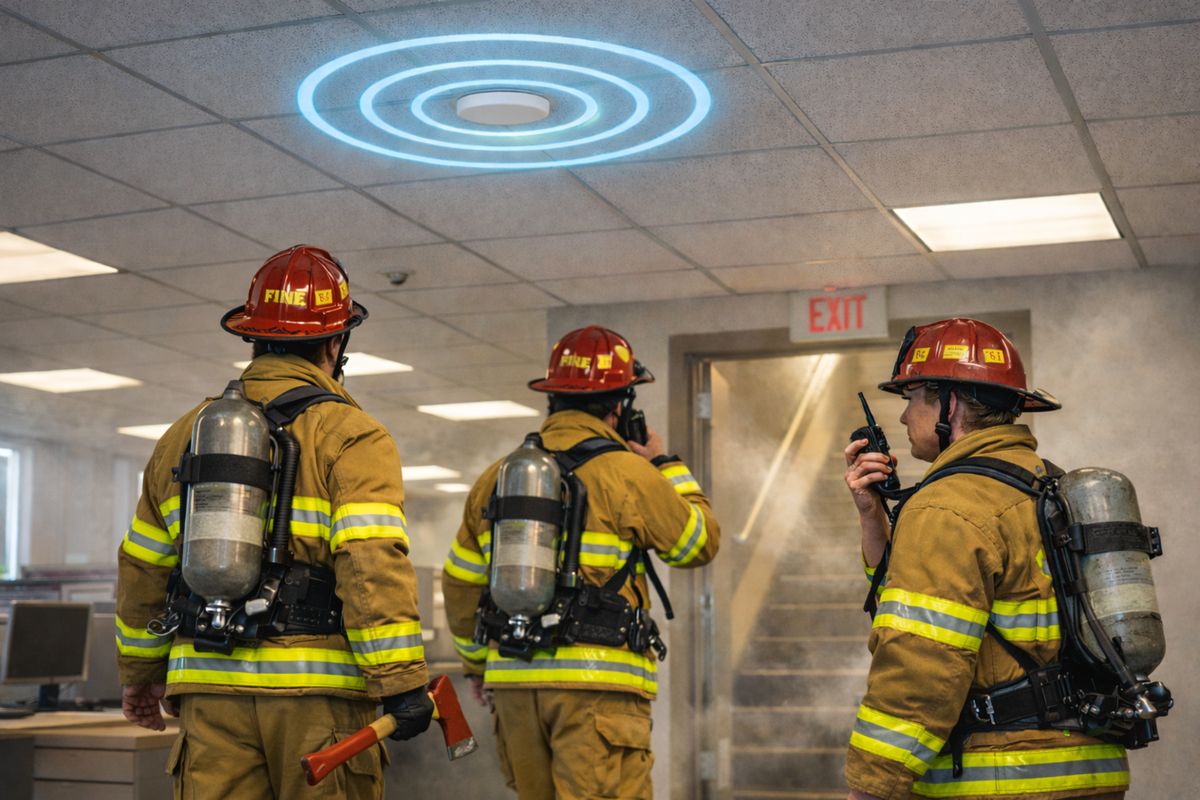
A Public Safety DAS (Distributed Antenna System) is an in-building communication system designed to ensure reliable radio coverage for first responders such as fire, police, and emergency medical services. These systems are typically required by code and are evaluated by the local AHJ to ensure signal strength, reliability, and coverage meet emergency communication standards inside a building.
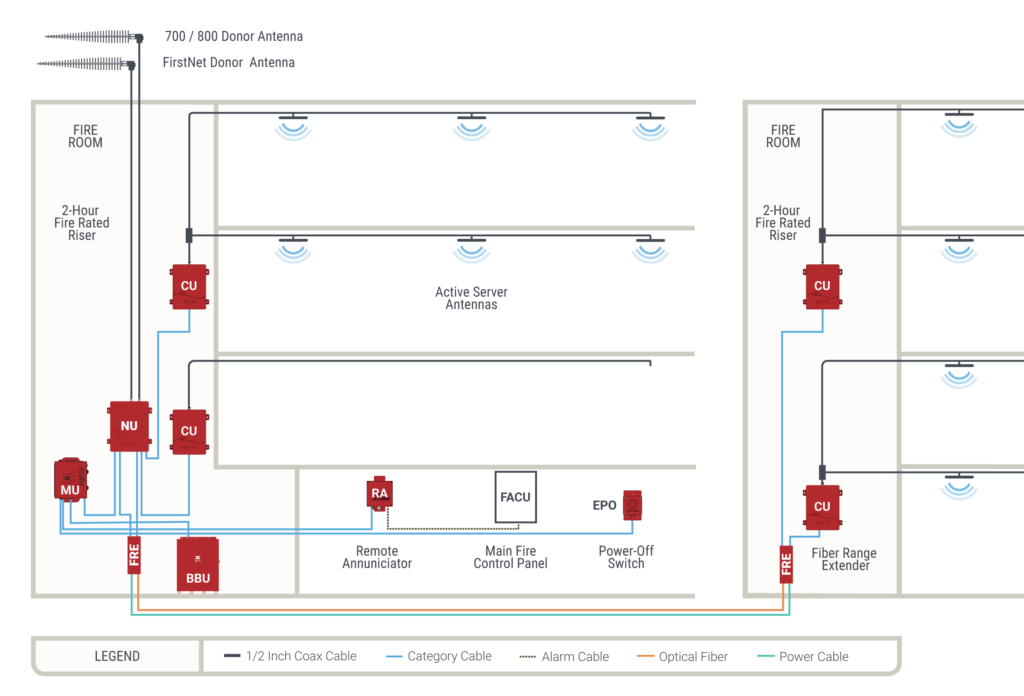
Modern construction materials like concrete, steel, and low-E glass often block or weaken radio signals. A Public Safety DAS ensures that first responders can communicate clearly throughout the entire building—including stairwells, basements, and mechanical rooms—during an emergency. Many jurisdictions require a Public Safety DAS to meet IFC and NFPA code requirements before occupancy approval.
While both systems distribute RF signals indoors, they serve different purposes:
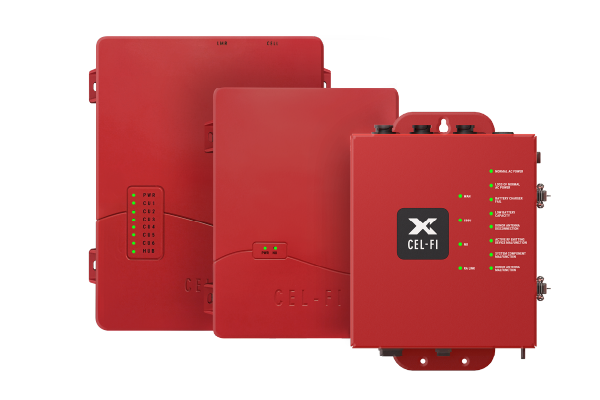
Systems like SHIELD EXTEND are purpose-built as ERCES solutions, engineered specifically for mission-critical reliability, compliance, and AHJ acceptance.
Performance can be influenced by several external factors, including:
This is why adaptability and precise control are essential features of a modern DAS system.
Nextivity SHIELD EXTEND allows technicians to make precise uplink and downlink adjustments using the WAVE Pro app. This enables fast, on-site optimization—often in minutes—without hardware changes. As shown in real-world deployments, even unexpected donor-side gain can be corrected quickly while keeping the system within tight AHJ-approved tolerances.
A properly designed and deployed DAS system benefits:
A high-performance Public Safety DAS (ERCES) is an investment in safety, compliance, and long-term reliability. Learn more on the Safer Building Coalition website.
Yes. SHIELD EXTEND is designed for environments like schools, hospitals, government facilities, and commercial buildings where reliable emergency communication is critical. Its ability to adapt to real-world RF conditions makes it especially well-suited for facilities with strict AHJ oversight and complex layouts.