
In the UK, the Terrorism (Protection of Premises) Act 2025, commonly referred to as Martyn’s Law, represents a significant shift in how public safety is approached across the country. The legislation places new duties on venues and public event organizers to assess terrorism risks and implement proportionate measures to protect the public.
Understanding Martyn’s Law requirements for public venues is becoming increasingly important for operators responsible for publicly accessible spaces. While much of the early discussion has focused on physical security, training, and preparedness, there is a critical operational enabler that is often overlooked: reliable in-building cellular connectivity.
The Act does not explicitly mandate mobile coverage within venues. However, when examined through the lens of incident response, public communication, and emergency coordination, the relevance of cellular connectivity to Martyn’s Law requirements for public venues becomes increasingly difficult to ignore.
What Martyn’s Law Requires of Public Venues
At its core, Martyn’s Law aims to ensure that those responsible for publicly accessible locations and events are taking reasonable and proportionate steps to mitigate risk and respond effectively in the event of an incident.
Depending on venue size and type, Martyn’s Law requirements for public venues include:
- Undertaking terrorism risk assessments
- Implementing mitigation measures
- Having clear emergency procedures
- Ensuring staff are trained and able to respond
- Supporting effective communication during an incident
Crucially, many of these requirements assume that people can communicate reliably when it matters most.
Communication Is Fundamental to Meeting Martyn’s Law Requirements
In the event of an incident at a public venue or event, communication becomes the backbone of safety and response:
- Members of the public need to be able to call emergency services
- Staff need to coordinate actions and follow emergency procedures
- Security teams must relay information quickly and accurately
- First responders rely on dependable communications to manage and control the situation
If mobile signals are weak, congested, or unavailable inside a venue, these processes can fail at precisely the moment they are most critical.
While Martyn’s Law does not explicitly state that venues must provide in-building cellular coverage, effective communication is implicit in almost every aspect of Martyn’s Law requirements for public venues.
The Reality of In-Building Coverage in Public Venues
Modern buildings present significant challenges for public mobile networks. Materials such as concrete, steel, energy-efficient glass, and underground layouts often block or degrade signals from external cell towers.
In large public venues, where dedicated capacity is required along with connectivity, solutions such as legacy DAS would be used. In public venues where the scale means legacy DAS is not viable, dedicated capacity is not the issue; it is all about connectivity. Such venues include:
- Stadiums and arenas
- Exhibition and conference centers
- Shopping centers
- Warehouses
- Transport hubs
- Theaters and concert halls
In these environments, relying solely on outdoor macro networks breaking into the building may not be sufficient to support the level of resilience and availability needed to meet Martyn’s Law requirements for public venues.
Supporting Staff and First Responders
Beyond public access to emergency services, Martyn’s Law places emphasis on preparedness and effective incident management.
Reliable in-building cellular connectivity enables:
- Faster coordination between venue staff and control rooms
- Real-time information sharing with emergency services
- Improved situational awareness for first responders
- Support for critical applications such as push-to-talk, location services, and incident management tools
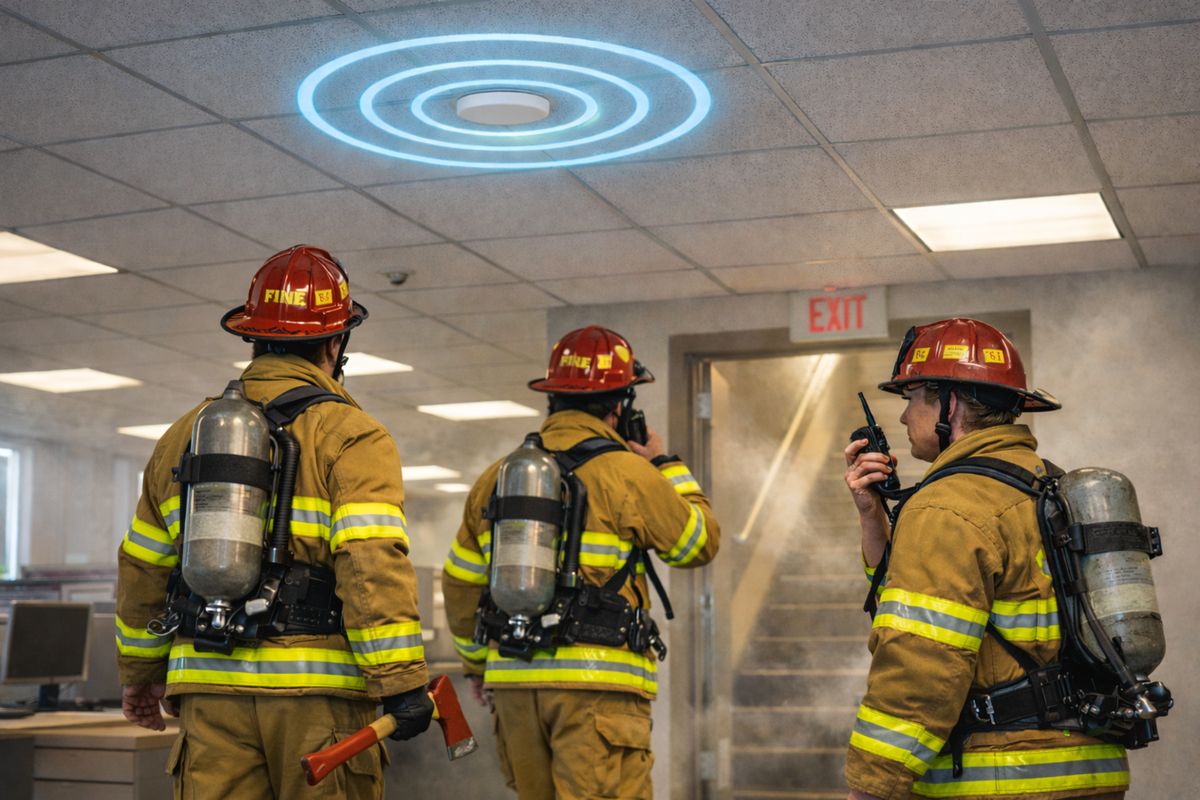
For police, fire, and ambulance services, poor indoor coverage can delay response times, limit visibility, and increase operational risk. Strengthening indoor connectivity directly supports compliance with Martyn’s Law requirements for public venues.
Cellular Connectivity as a Risk Mitigation Measure
From a compliance perspective, venue operators will increasingly need to demonstrate that they have taken reasonable steps to reduce risk and enable effective response.
While each venue’s obligations under Martyn’s Law will be assessed individually, in-building cellular connectivity can reasonably be viewed as a supporting risk mitigation measure.
As expectations around public safety evolve, digital infrastructure is becoming an important consideration within Martyn’s Law requirements for public venues, alongside physical security measures.
Looking Ahead
Martyn’s Law marks a pivotal moment for public venue operators. Compliance will not be a one-time exercise, but an ongoing commitment to safety, preparedness, and resilience.
As venues review their risk assessments and mitigation strategies, connectivity should be part of the conversation. Addressing Martyn’s Law requirements for public venues means considering not just physical protections, but the systems that enable people to communicate during an incident.
At Nextivity, we believe that reliable in-building cellular coverage is not just a convenience, but a critical component of modern public safety infrastructure. As legislation, technology, and public expectations continue to converge, venues that invest in resilient connectivity will be better positioned to meet Martyn’s Law requirements for public venues and protect those who rely on them.