For many organizations, poor indoor cellular coverage is no longer just an inconvenience—it’s a business risk. Yet traditional distributed antenna systems (DAS) are often too large, too complex, and too expensive for small-to-mid-size facilities. That’s why a cell signal booster has become a powerful, cost-effective alternative for the middleprise market.
Nextivity cell signal booster solutions for middleprise deliver reliable, carrier-approved in-building cellular coverage without the cost, complexity, or long deployment cycles associated with legacy DAS. For most commercial and public buildings, a modern booster can provide the same performance outcomes as a traditional DAS—at a fraction of the cost and installation time.
Why a Cell Signal Booster Is Ideal for Middleprise Buildings
System integrators have historically focused on large DAS deployments in airports, stadiums, convention centers, and massive campuses. However, the majority of buildings simply don’t need that scale.
According to the U.S. Energy Information Administration (EIA), the United States has:
- 351,000 commercial and public buildings between 50,000 and 500,000 square feet
- 40 billion square feet of total middleprise floor space
These facilities represent a huge, underserved market where a cell signal booster is often the best technical and economic fit.
Unlike traditional DAS, which can require months of planning, carrier negotiations, and significant capital expense, a modern booster is:
- Faster to deploy
- Lower cost
- Carrier-approved and network-safe
- Scalable for single buildings or multi-building campuses
Middleprise Cellular Coverage: Similar Goals, Different Technology
Many large integrators focused on macro telecom infrastructure don’t maintain teams dedicated to in-building cellular coverage for facilities under one million square feet. This creates an opportunity for collaboration with specialty firms experienced in cell signal booster deployment.
Because traditional DAS is often oversized for middleprise needs, proposing a purpose-built cell signal booster solution is essential. These systems are designed specifically to overcome RF challenges inside modern buildings—dense construction materials, metal, low-E glass, and energy-efficient designs that block outdoor signals.
Subcontractors with experience in cell signal booster installations are frequently brought in to support general contractors, low-voltage installers, and structured cabling teams.
Structured Cabling Matters
Category, coax, or fiber cabling is often installed by structured cabling technicians. While these teams are highly skilled at running cable, they may not fully understand RF behavior or how cabling decisions impact cell signal booster performance.
Poor antenna placement, improper separation, or installation in RF-hostile environments can create interference, reflections, and degraded system performance. Oversight and RF-aware design are critical for a successful cell signal booster installation.
A Cost-Effective Way to Leverage Fiber with a Cell Signal Booster
Traditional DAS remains the gold standard for the largest facilities, using dedicated signal sources and fiber backbones to support gigabit speeds. However, these systems are often financially impractical for middleprise buildings due to:
- High equipment costs
- Long installation timelines
- Carrier contract negotiations
- Increased power, cooling, and operating expenses
A modern cell signal booster, however, can offer hybrid architectures that leverage fiber without the cost and complexity of traditional DAS.
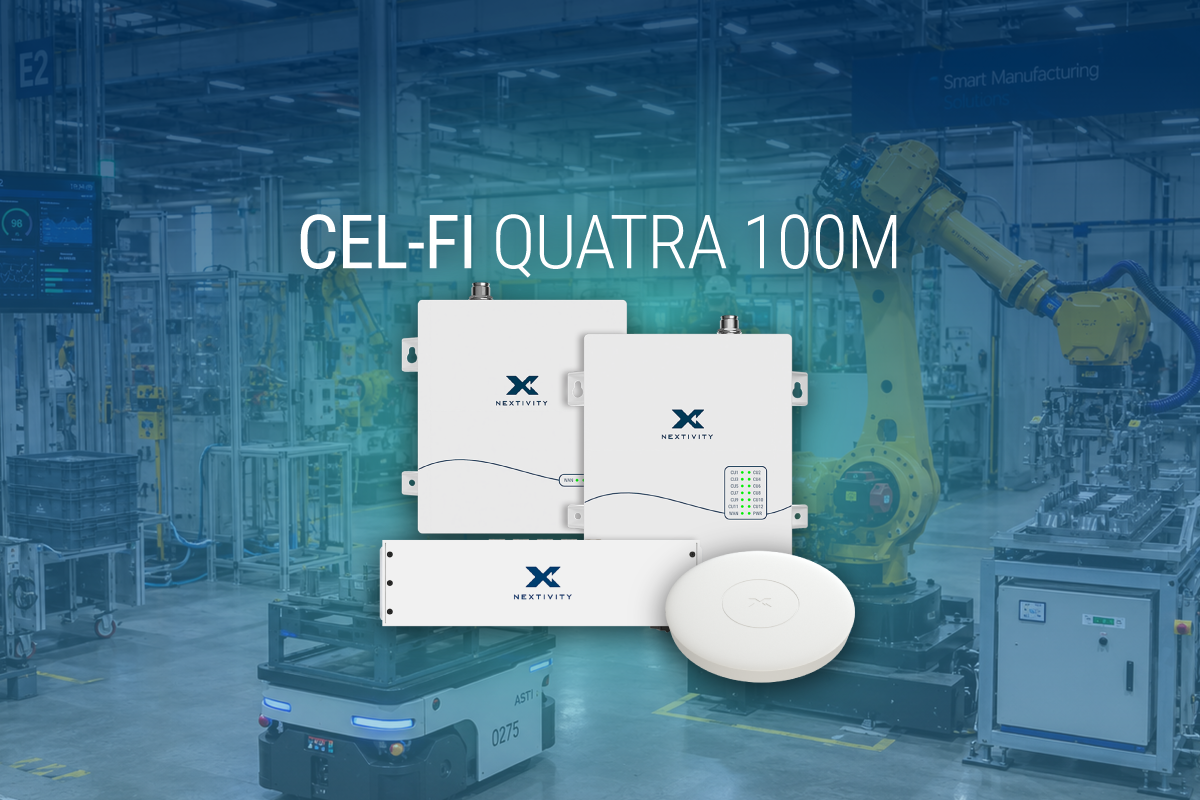
In 2017, Nextivity introduced the CEL-FI QUATRA line—fully digital, carrier-approved systems for middleprise. These systems:
- Support single, dual, or multi-carrier operation
- Use off-air donor signals or small cells
- Enable distributed small cell networks using Supercell® Mode
- Deploy in days instead of months
A single CEL-FI QUATRA system can deliver up to 100 dB of gain and cover up to 656 feet horizontally or vertically, using standard category cable between the headend and remote units.
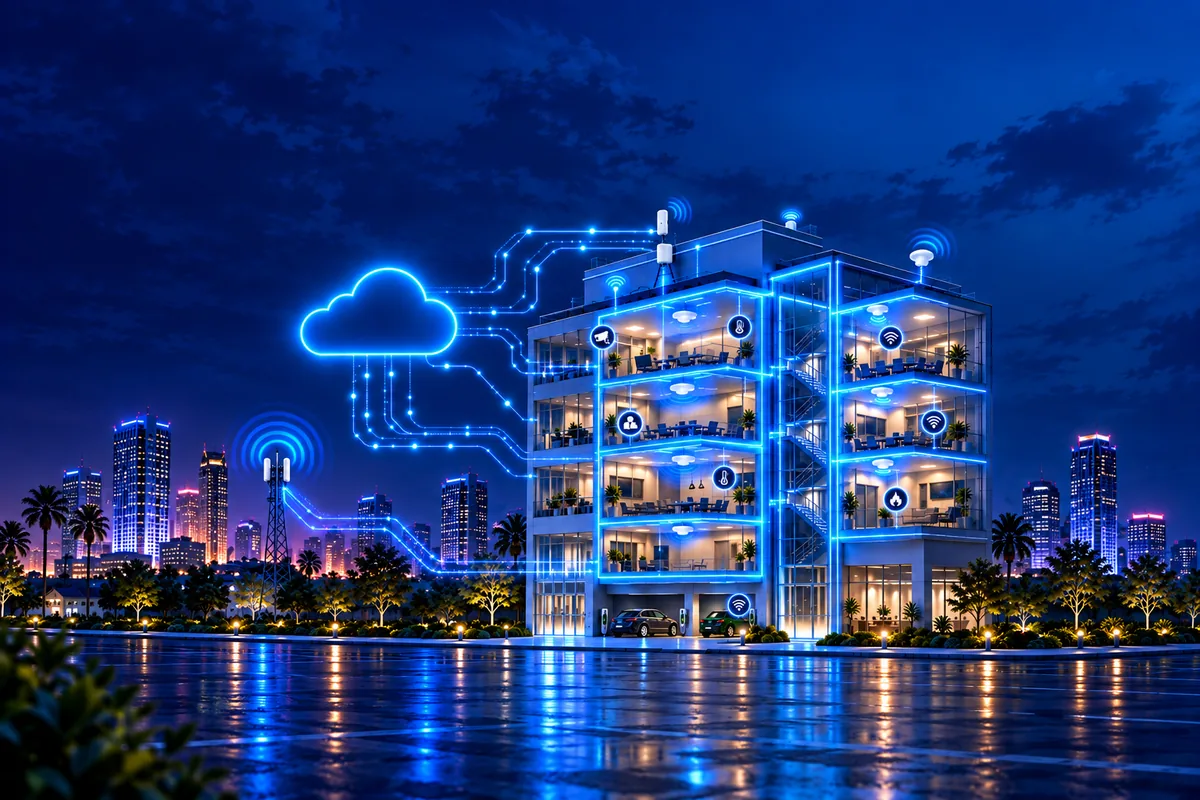
With the addition of a fiber hub, a cell signal booster system can extend coverage up to 1.25 miles, making this hybrid architecture ideal for:
- Multi-building campuses
- High-rise structures
- Remote or edge-of-coverage facilities
Preventing Interference with a Carrier-Approved Booster
When buildings experience poor cellular reception, occupants often attempt quick fixes by installing multiple low-cost repeaters. This approach frequently creates RF noise and interference that degrades carrier networks.
“People add one repeater, then another, and suddenly you have antenna farms interfering with each other and the macro network,” said Taylor Underwood, telecommunications engineer at MSB. “That affects not just the building—but everyone connected to that cell tower.”
A carrier-approved cell signal booster, like those from Nextivity, is designed to eliminate this problem. With centralized architecture and intelligent power control, a single properly designed system can cover an entire building or campus without creating interference.
FCC Part 20 Cell Signal Booster and SLA Confidence
Many middleprise cell signal booster systems operate under FCC Part 20 rules, typically supporting two bands per carrier. For most buildings under 500,000 square feet, this is more than sufficient to meet service level expectations.
While traditional DAS systems often operate under Part 90, a Part 20 cell signal booster offers major advantages:
- Faster approval and deployment
- Simplified carrier sign-off
- Lower project costs
As Underwood notes, QUATRA Part 20 systems have proven to be “solid, reliable, and easy to deploy,” allowing integrators to order, install, and commission systems quickly—without months of carrier negotiations.
Deployment Example: K-6 School Campus
MSB recently completed a cell signal booster deployment for a new K-6 school campus totaling 236,000 square feet across three buildings.
The LEED-certified construction acted as a near-perfect Faraday cage, blocking nearly all outdoor cellular signals. Using iBwave design tools, MSB deployed a system with:
- Centralized headend
- Fiber runs between buildings
- Roof-mounted donor antennas for each carrier
- Full redundancy and alternate routing
The system was commissioned in about an hour, with carrier verification confirming clean performance and zero interference. Remote monitoring tools allow ongoing performance assurance and maintenance.
Remarkably, the entire cell signal booster system—including installation—cost roughly the same as the headend alone of a traditional DAS.
Why a Cell Signal Booster Represents the Future of Middleprise Connectivity
For middleprise facilities, a cell signal booster offers the ideal balance of performance, cost, speed, and scalability. It eliminates the complexity of legacy DAS while delivering reliable, carrier-approved cellular coverage that businesses depend on every day.
As demand for always-on connectivity grows, a cell signal booster is no longer a compromise—it’s the smart, modern foundation for in-building cellular coverage.
A version of this article was originally published by AGL Magazine.