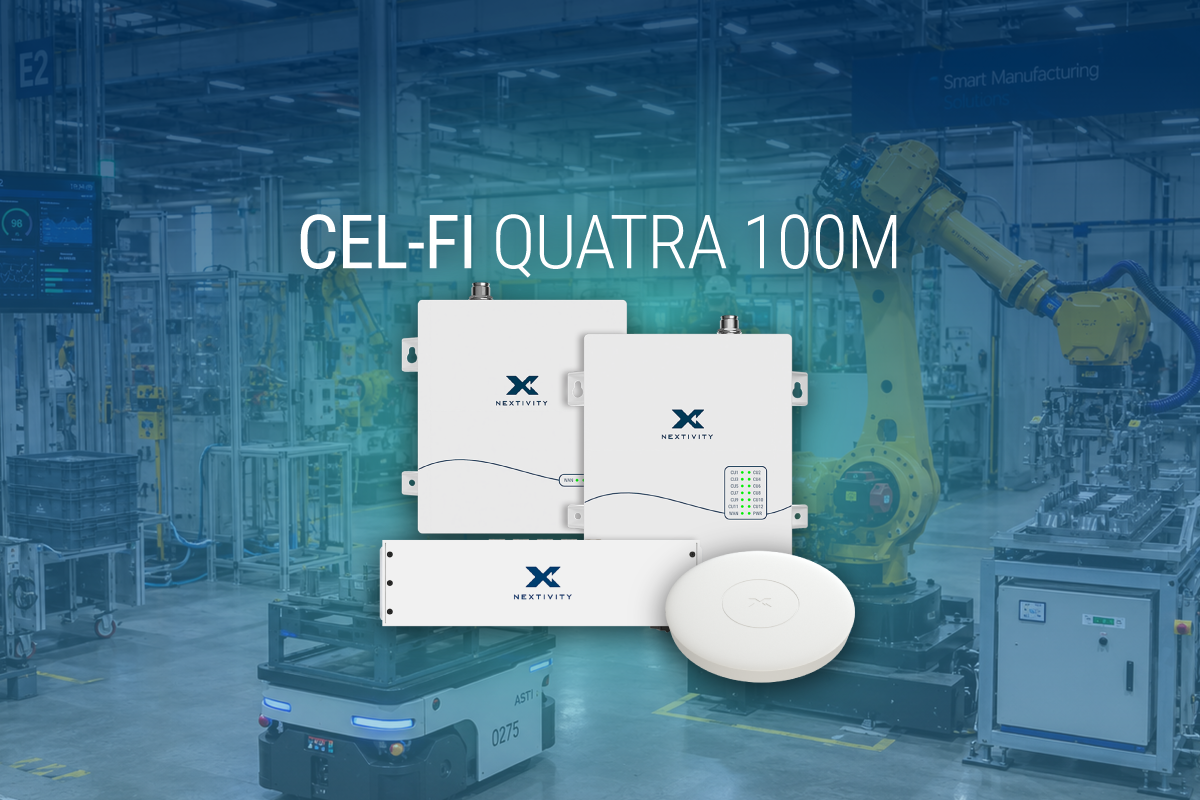

If you search online for the best cell signal booster, you’ll quickly find dozens of products claiming to be “the best.” But here’s the truth most comparison lists miss:
The best cell signal booster is the one that works best for your specific space, building type, and usage needs.
A small apartment, a single-room office, a warehouse, and a hospital all have wildly different connectivity challenges. Expecting one booster to solve all of them is like expecting one vehicle to work equally well as a scooter, a pickup truck, and a semi. It just doesn’t work that way.
This article breaks down what “best” really means, explores the most common use cases for cell signal boosters, and explains when commercial-grade DAS solutions—like those designed by Nextivity—are the right choice.
What Does “Best Cell Signal Booster” Actually Mean?
The word best is subjective. In reality, the best cell signal booster is defined by how well it meets your requirements:
- Coverage area size (small room vs. large building)
- Building materials (glass, steel, concrete, low-E windows)
- Number of users and devices
- Carrier and frequency support
- Reliability and uptime requirements
- Regulatory compliance and performance guarantees
For some people, “best” means inexpensive and easy to install. For others, it means rock-solid performance across thousands—or even millions—of square feet.
Best Cell Signal Boosters for Small Spaces and Temporary Use
For apartments, small homes, RVs, or remote cabins, consumer-grade boosters can make sense.
When a consumer booster is the best option:
- Coverage needed for one or two rooms
- Few users at a time
- Temporary or personal use
- Budget is the primary concern
- Minimal installation complexity
These boosters are typically plug-and-play and relatively inexpensive. They can improve call quality and basic data speeds in small environments.
That said, they are not designed for scalability, high device density, or mission-critical communications.
Why Larger Buildings Need a Very Different Solution
As spaces get larger and more complex, the definition of “best” changes completely.
Warehouses, factories, hospitals, campuses, offices, hotels, and retail environments introduce challenges like:
- Long distances between users and antennas
- Heavy signal-blocking materials
- High device counts
- Multiple carriers and frequency bands
- Business-critical operations that depend on uptime
In these environments, consumer boosters fall short quickly.
Best Cell Signal Booster for Commercial and Enterprise Buildings is a DAS
For commercial and enterprise projects, the best cell signal booster is not a single box—it’s a properly designed Distributed Antenna System (DAS) built with enterprise-grade technology.
This is where Nextivity stands apart.
Why Nextivity is the best choice for enterprise environments
Nextivity designs and builds commercial-grade enterprise DAS signal boosters engineered specifically for large, complex buildings.
Key advantages include:
- Scalable DAS architecture
Designed to cover everything from tens of thousands to millions of square feet. - Carrier-approved, standards-based technology
Ensures consistent, compliant performance across supported networks. - Advanced signal processing and control
Automatically optimizes signal levels instead of relying on fixed-gain amplification. - Support for modern connectivity needs
Public cellular, private LTE/5G, IoT devices, and mission-critical communications. - Designed for permanent installations
Built to operate 24/7 in enterprise environments where connectivity is not optional.
Enterprise and Large Buildings: CEL-FI QUATRA DAS Solutions
For large and complex environments, the Nextivity CEL-FI QUATRA family delivers scalable, high-performance in-building DAS cell phone signal booster systems.
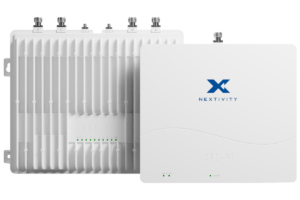
QUATRA 4000c/ 4000e
Designed for the most complex enterprise environments with demanding capacity, coverage, and multi-band requirements.
CEL-FI QUATRA 100M
Ideal for large commercial buildings that need robust enterprise-grade 5G, single-operator, ultra-fast speeds, and low latency.
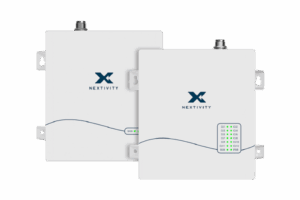
CEL-FI QUATRA EVO
A flexible, cost-effective solution for mid-size enterprises ready to scale.
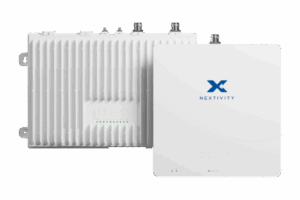
If you’re responsible for keeping employees connected, enabling digital operations, supporting safety systems, or future-proofing a facility, this is what “best” really looks like.
When Nextivity Is (and Isn’t) the Best Cell Signal Booster
It’s important to be honest—Nextivity is not trying to be the cheapest option, and that’s intentional.
Nextivity is the best solution if you need:
- Reliable indoor cellular for commercial or enterprise buildings
- Coverage for large or complex spaces
- A long-term, scalable infrastructure investment
- Professional design, installation, and support
- Performance that businesses and regulators can trust
Nextivity is probably not the best fit if:
- You just need a temporary fix in a small room
- The space is a single-user home or apartment
- Budget is the only decision factor
- You want a DIY, consumer-grade product
Different tools for different jobs—and that’s exactly how it should be.
How to Choose the Best Cell Signal Booster for Your Space
Before buying anything, ask these questions:
- How big is the area that needs coverage?
- How many users and devices will connect at once?
- What are the walls and structure made of?
- Is this a temporary workaround or permanent infrastructure?
- What happens if connectivity fails?
If the answer to the last question is “business stops” or “safety is impacted,” then an enterprise-grade DAS solution is not just the best option—it’s the only responsible one.
Final Thoughts: “Best” Is About Fit, Not Hype
There is no single best cell signal booster for everyone.
The best booster is:
- Affordable and simple for small, personal spaces
- Engineered, scalable, and reliable for commercial and enterprise buildings
For organizations that depend on indoor connectivity to operate, grow, and stay safe, Nextivity delivers industry-leading cellular DAS system solutions built for the real world—not just spec sheets.
If you’re planning a commercial or enterprise deployment, choosing the right signal booster isn’t about finding the cheapest option. It’s about choosing the one that will work—today and years from now.